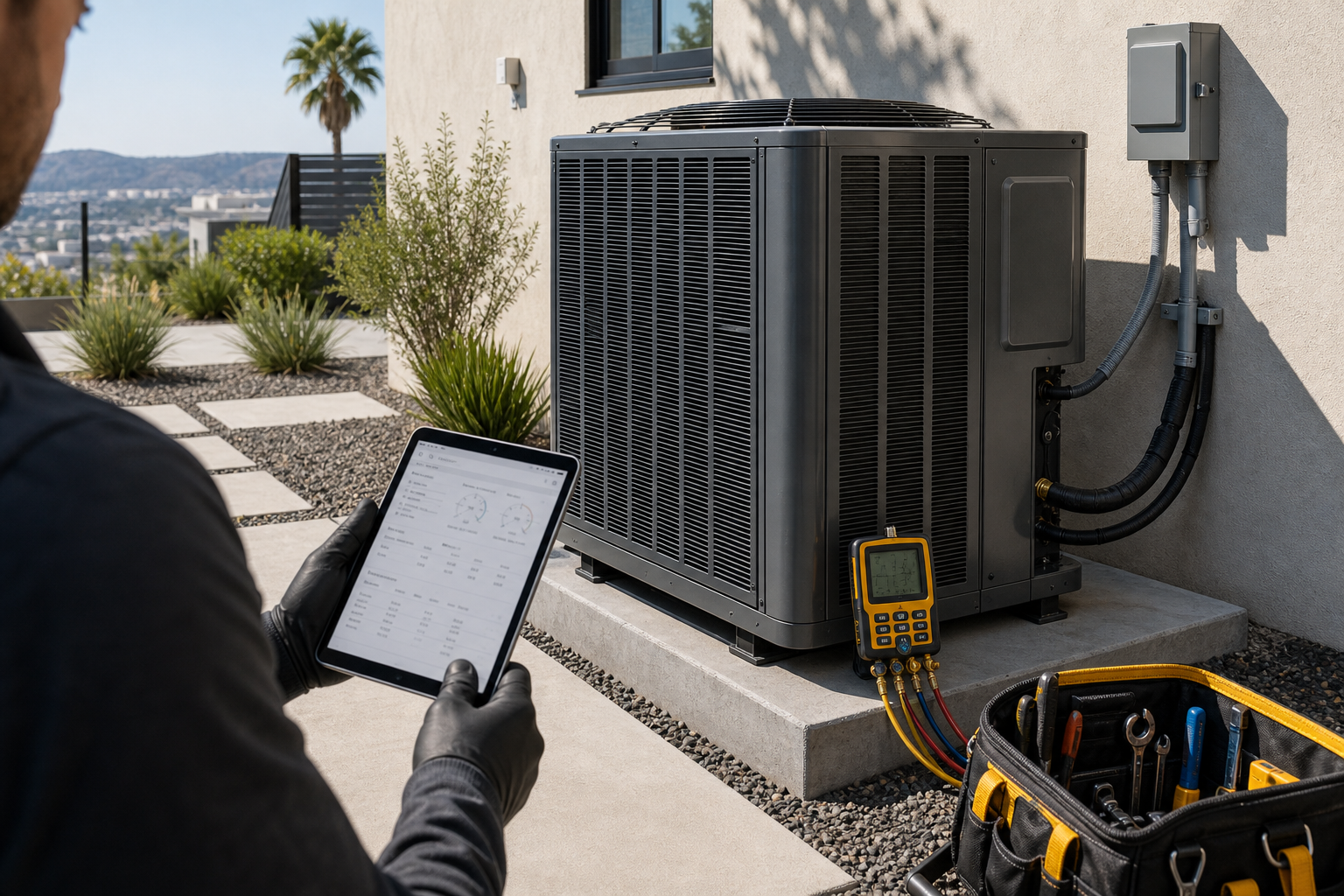
Heat Pump Installation
replace aging gas heat and old AC with an efficient all-electric or dual-fuel system sized for the actual Los Angeles home
Each service is written around the measurements, photos, startup checks, and owner handoff that make a Los Angeles HVAC installation easier to defend.
The service taxonomy is installation-first because replacement work creates the highest long-term risk. Repairs matter, but the expensive decisions are equipment match, airflow, line routing, controls, filter strategy, warranty handoff, and whether the final system can be defended with readings and photos.
replace aging gas heat and old AC with an efficient all-electric or dual-fuel system sized for the actual Los Angeles home
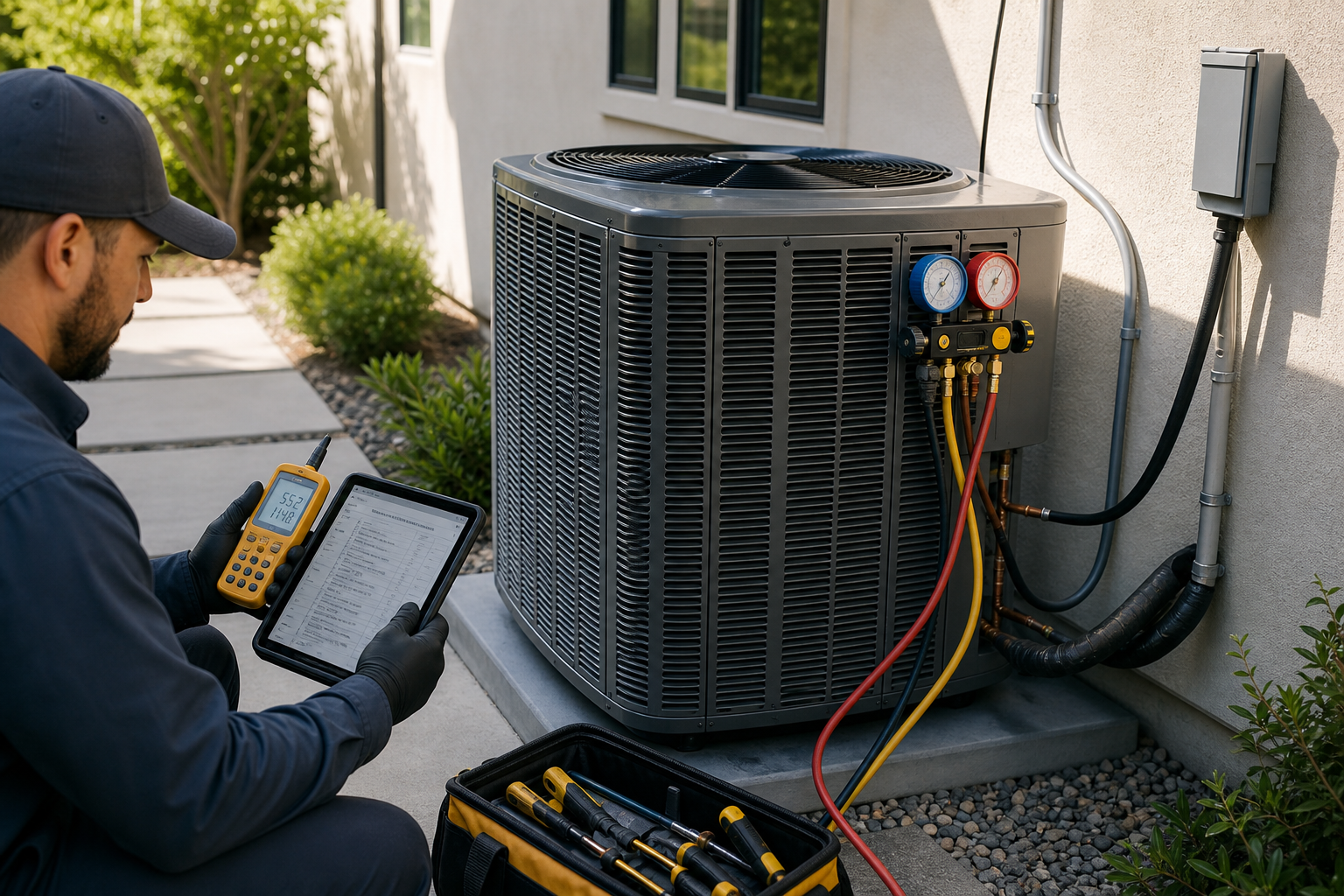
replace failed or inefficient central air systems with measured airflow and startup proof instead of copying the old tonnage
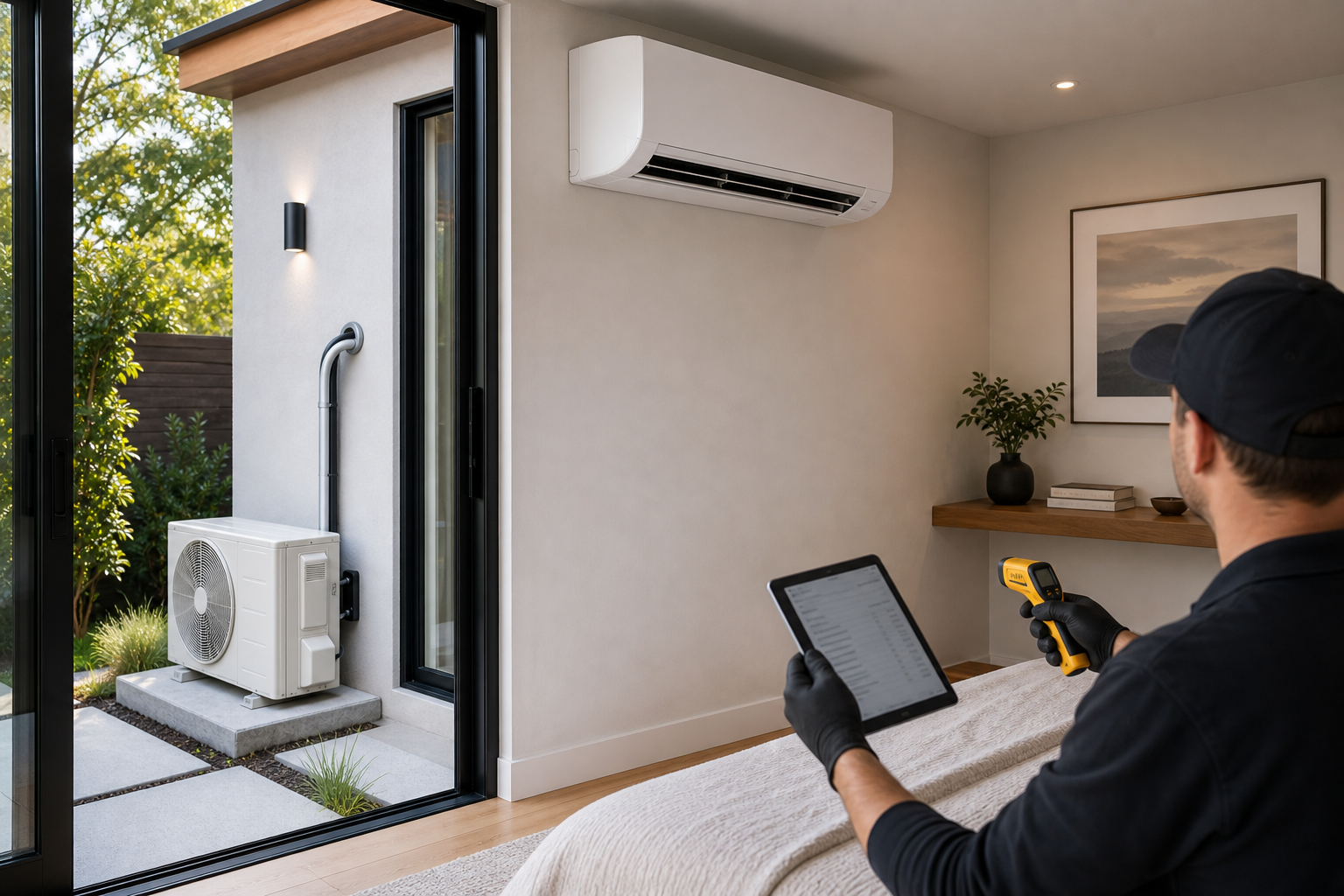
add room-by-room comfort for ADUs, studios, offices, garages, and rooms where ducts are the wrong tool
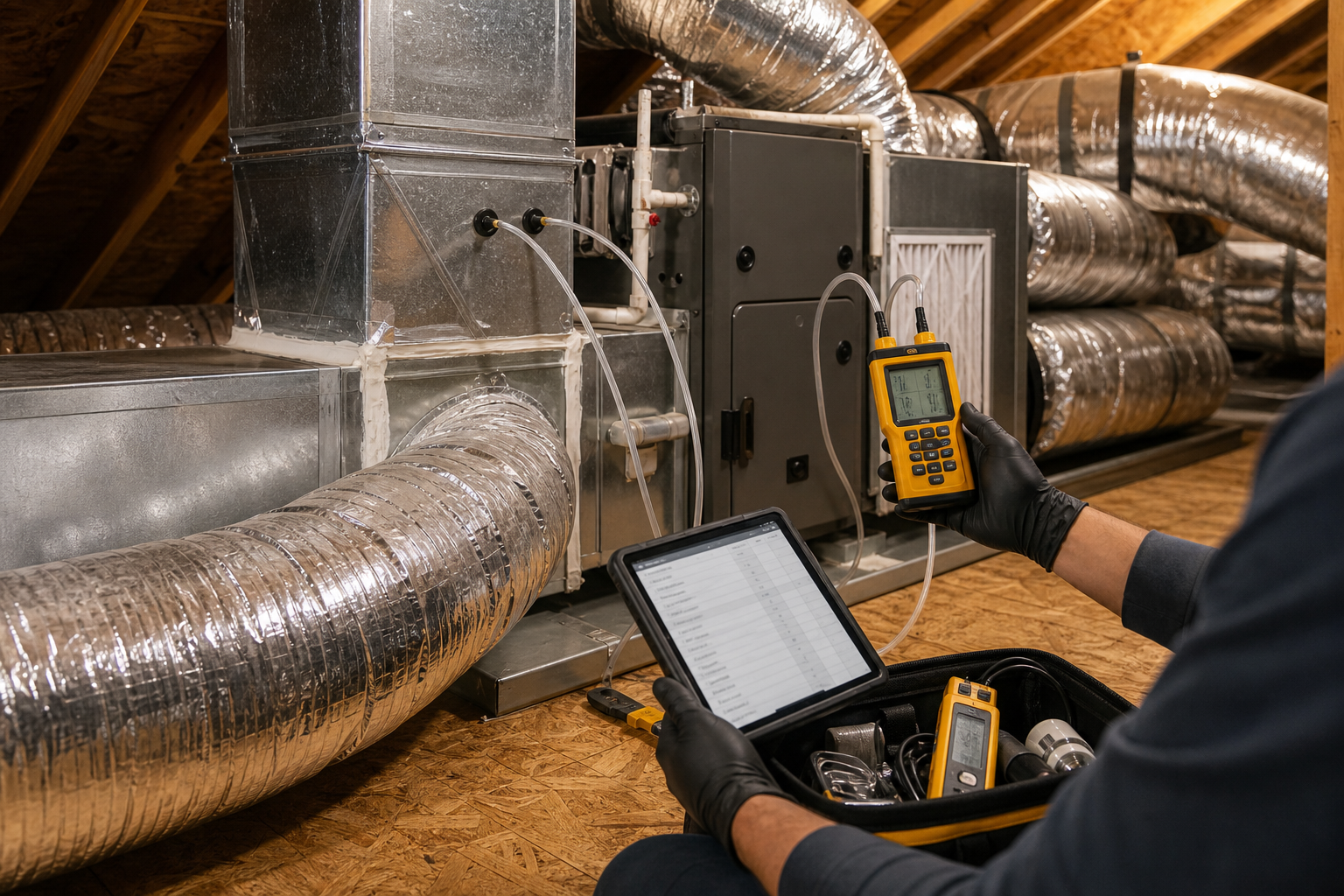
fix the ducts, returns, and leakage that decide whether new equipment can actually move comfort through the home
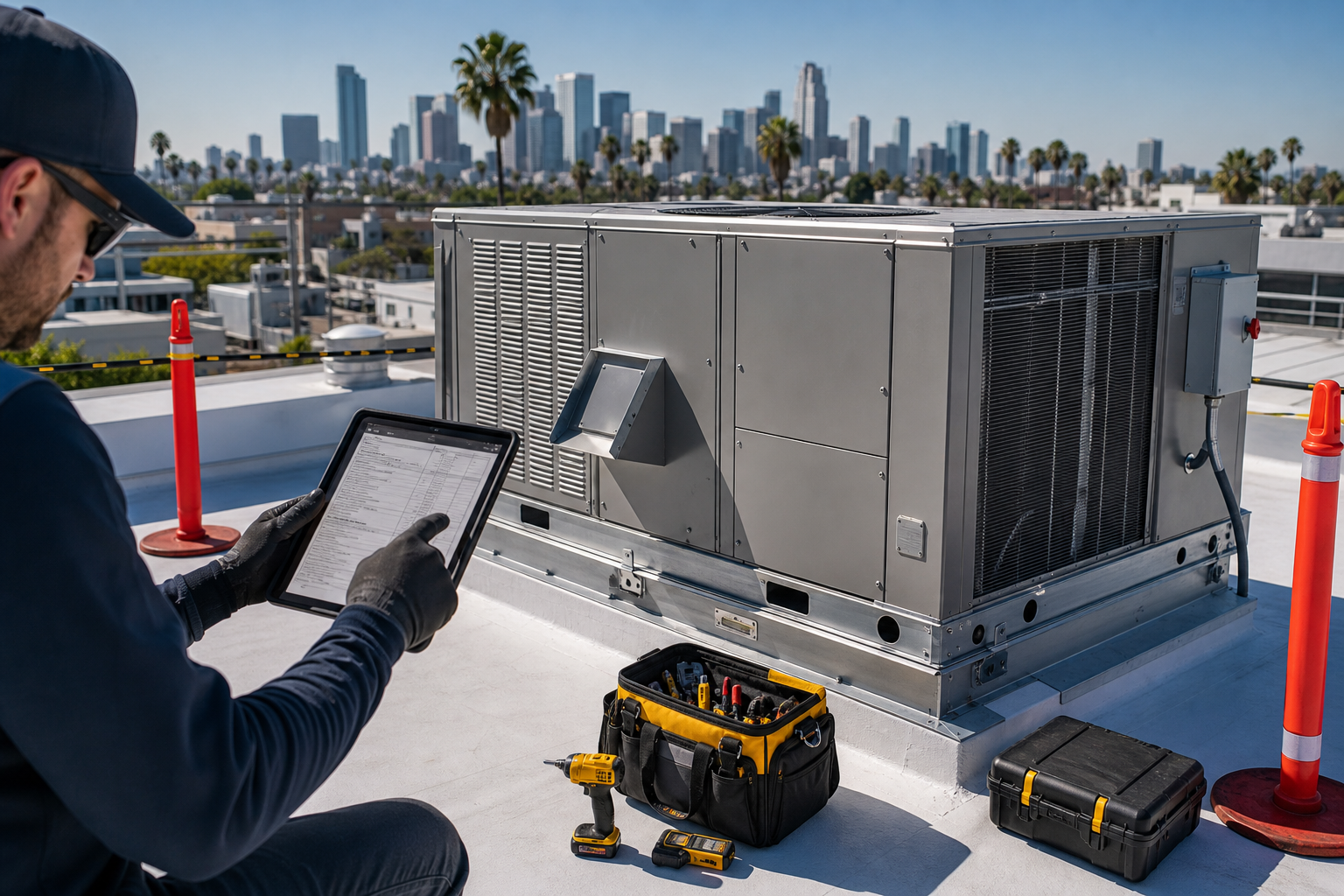
replace rooftop package equipment for homes, condos, and multifamily properties with access, crane, and tenant documentation
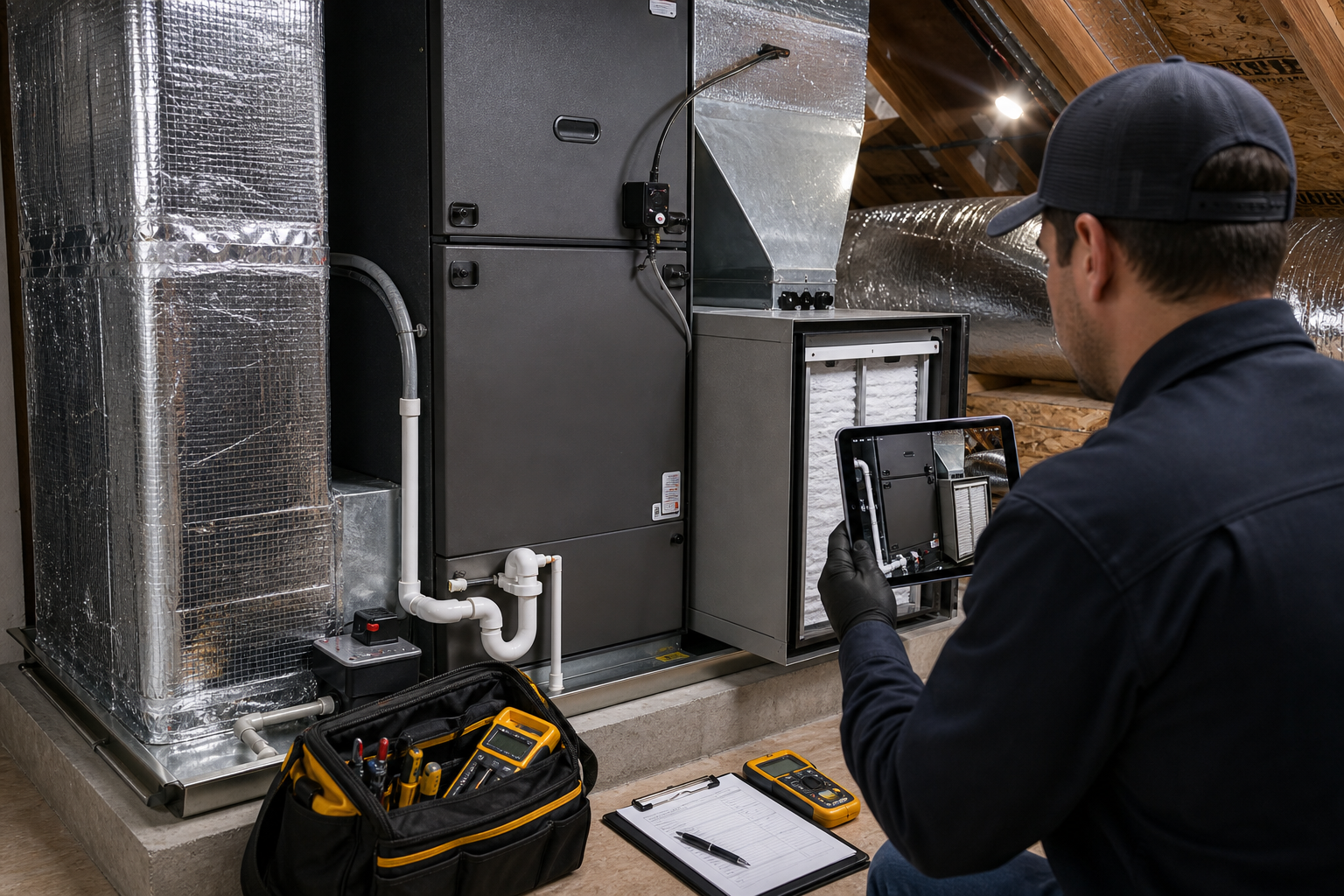
replace the indoor side of the system with attention to coil match, cabinet fit, drains, filters, and service access
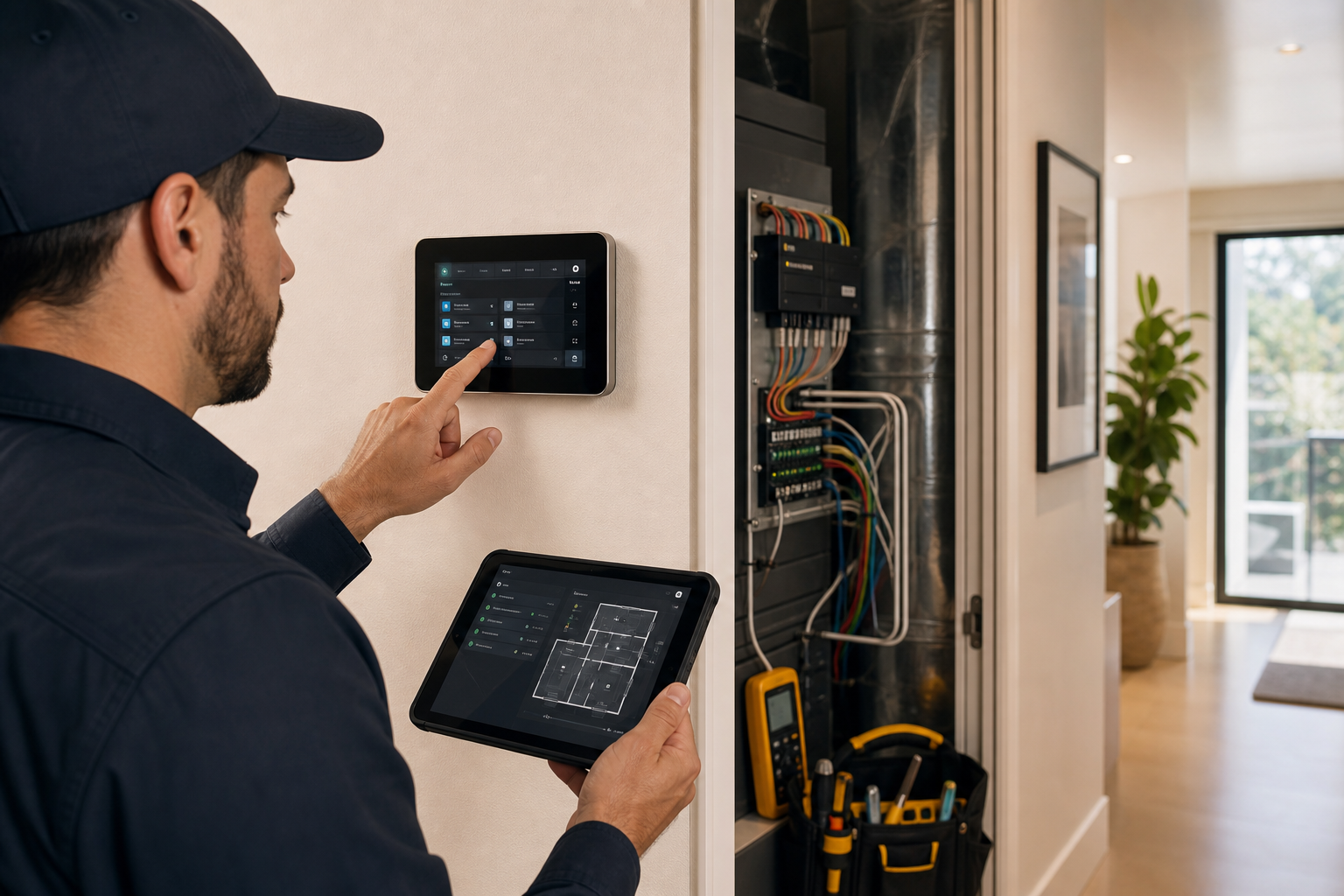
install zoning, sensors, smart thermostats, and communicating controls without creating short cycling or confusing owner settings
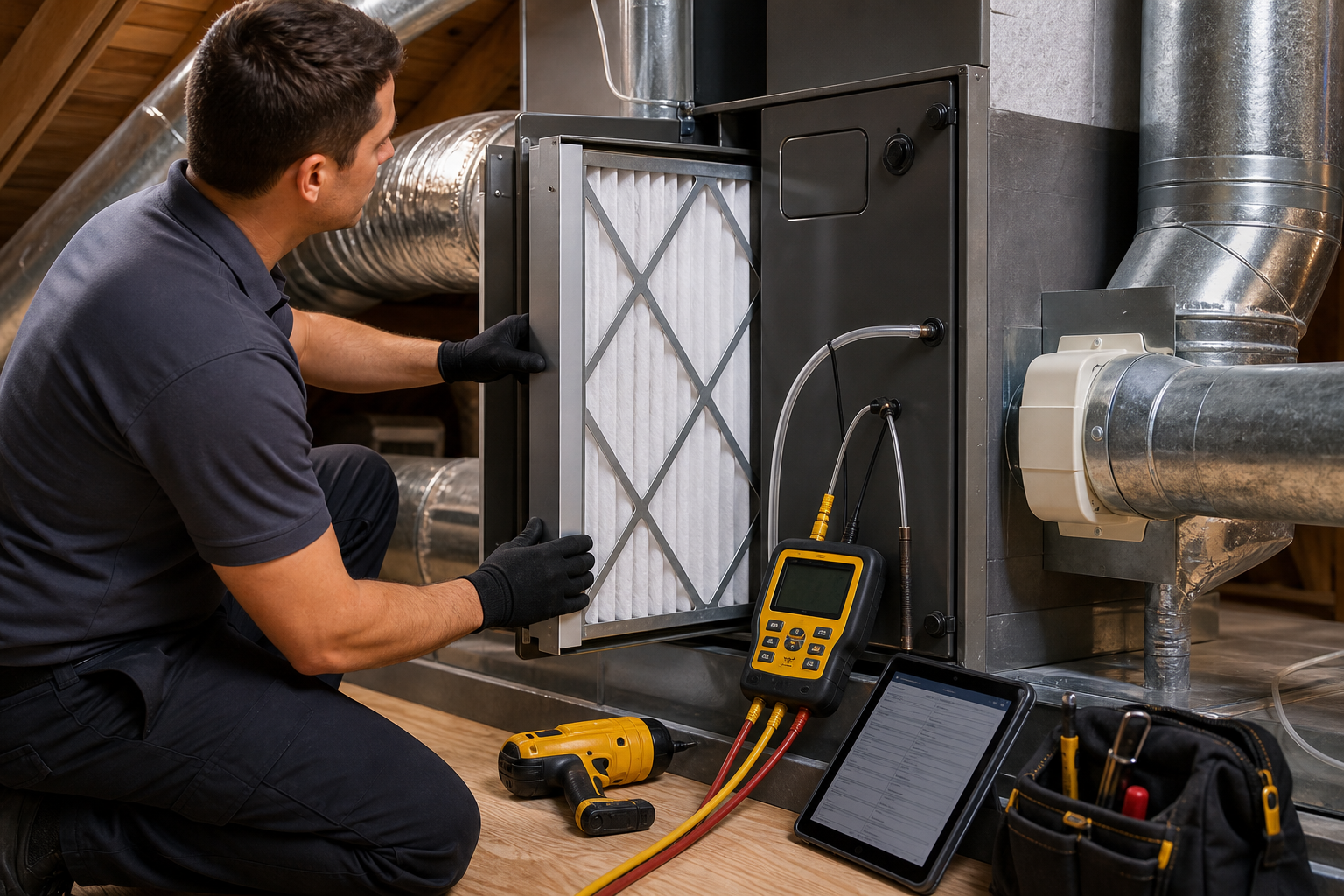
upgrade filter cabinets, ventilation strategy, and smoke-ready operation without starving the HVAC system
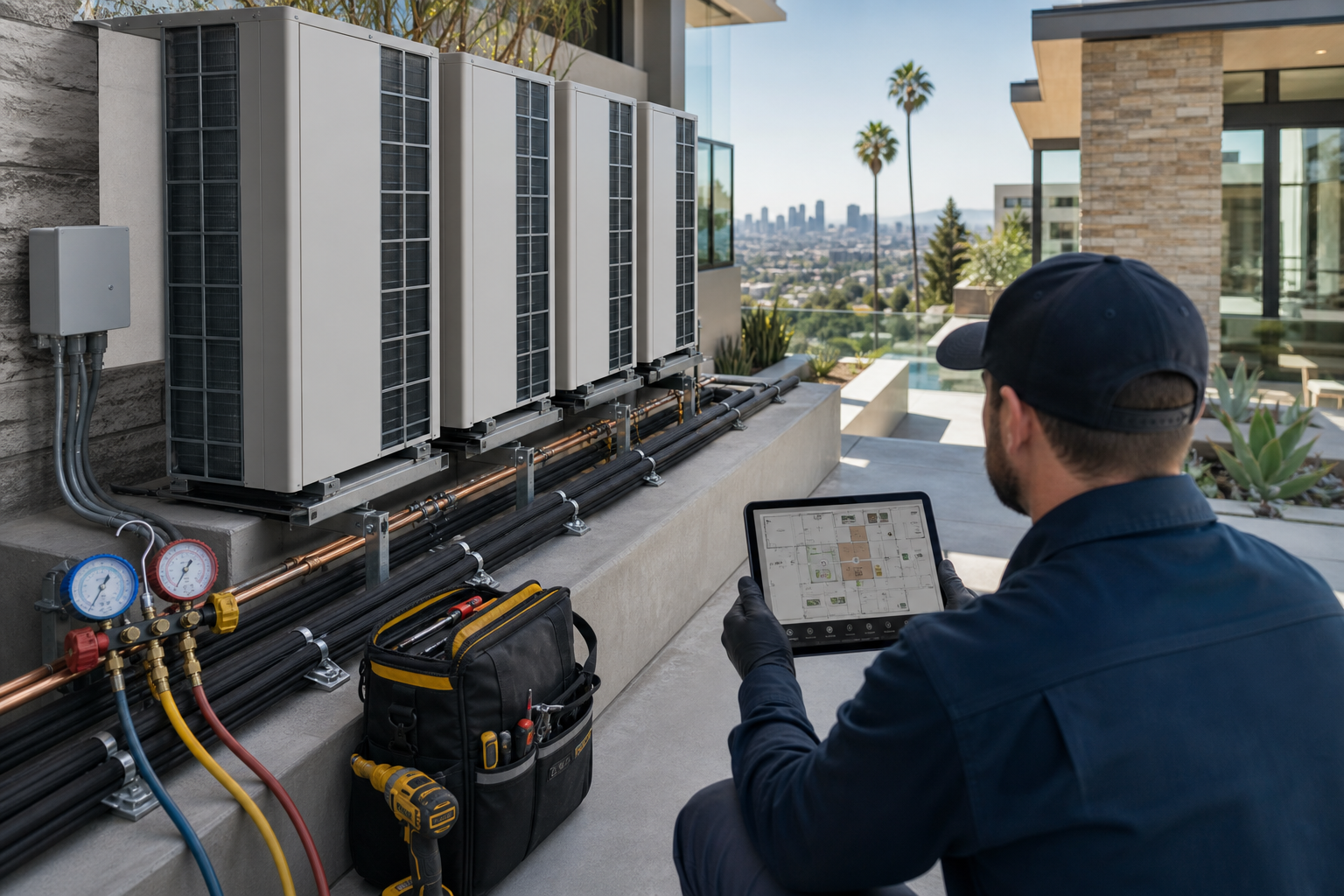
install premium multi-zone inverter systems where load diversity, controls, line sets, and commissioning discipline matter
Start by separating the symptom from the scope. A hot bedroom may lead to ductwork redesign, zoning controls, a ductless mini split, a heat pump replacement, or simply a better return-air path. A high utility bill may come from old equipment, poor duct insulation, wrong thermostat behavior, filtration pressure drop, or a system that is short cycling because the old tonnage was copied. The service name should come after the building diagnosis.
Each service page on this site identifies commissioning focus, install risks, deliverables, price context, FAQ language, visible reviews, and internal links to city and brand combinations. That structure helps search engines understand the service entity and helps homeowners see the difference between a box swap and an accountable installation.
Heat pump and central AC pages should explain load assumptions, AHRI or model match, refrigerant or manufacturer startup checks, thermostat staging, static pressure, filter fit, and owner training. Ductless pages should explain wall placement, condensate route, line-set protection, vacuum record, sound, and app or remote handoff. Rooftop pages should explain access, curb fit, crane or lift assumptions, startup amperage, manager notes, and tenant timing.
Ductwork and filtration pages should be even more direct about airflow. A premium system attached to bad ducts can become noisy, inefficient, and uneven. If a quote sells MERV 13 filtration, duct redesign, zoning, or smart controls without checking pressure, return paths, bypass leakage, and blower capability, the homeowner is buying hope instead of proof.
Repair content often attracts urgent clicks, but installation pages attract higher-intent homeowners who are comparing large decisions. That is where strong SEO, GEO, and AEO content can create revenue: city plus service, brand plus service, service plus commissioning, service plus rebate documentation, service plus static pressure, and service plus proof pack queries. The page has to answer those questions with enough specificity to be worth ranking.
The conversion path is intentionally direct. A homeowner who understands the proof standard should book a consult or call before equipment is ordered. The purpose of the site is not to entertain casual readers. It is to help serious homeowners choose an installation scope that can be measured, documented, and defended.
The service page explains the installation category. The city-service page explains how that category changes in a specific location, such as Pasadena heat pump installation, Venice ductless mini split placement, Beverly Hills air handler replacement, or Woodland Hills filtration upgrades. The brand-service page explains how a manufacturer choice changes the proof requirements, such as Bosch heat pump airflow, Mitsubishi line-set routing, or Lennox filtration pressure drop.
That structure lets the site cover long-tail demand without forcing every page to repeat the same generic copy. Each layer has a job: service intent, local constraint, brand fit, proof checklist, visible review parity, FAQ answers, and booking CTA. When those layers are clear, programmatic SEO has a better chance of ranking without looking like a doorway pattern.
The commercial emphasis stays on installations because that is where project value, customer urgency, and differentiation line up. The service index should push homeowners toward scoped consults, not bury them in repair-adjacent copy that attracts lower-value traffic.